
Emotional Wellness
Regulation Is a Family Sport: Here’s How We Practice It
By Phizzics Davis · 7 min read
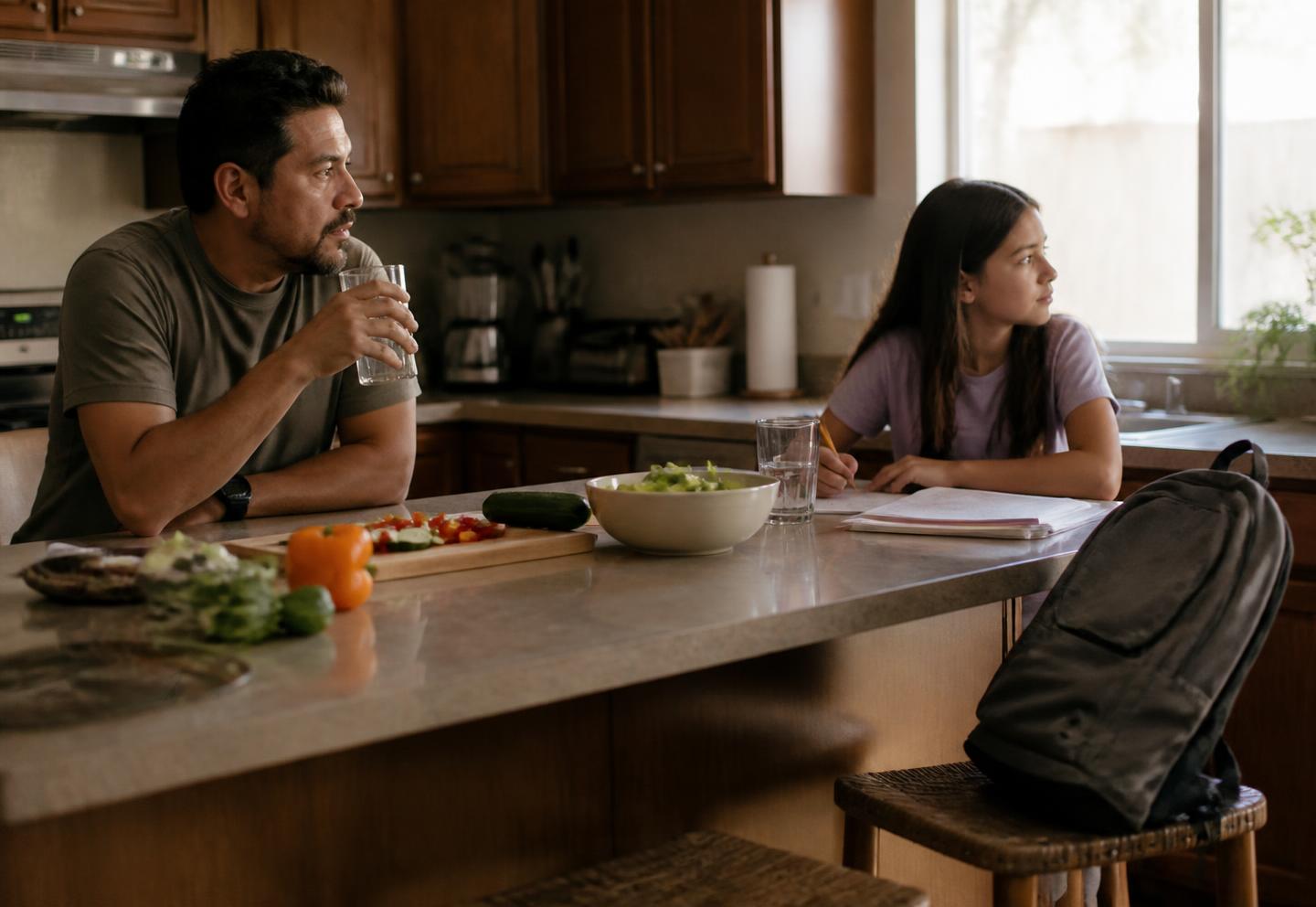
There was a time when I thought regulation was mostly something I needed to teach my child.
Calm down.
Take a breath.
Use your words.
Tell me what’s wrong.
Those phrases can come easily when you’re the adult in the room.
What took me longer to understand was that I couldn’t always ask my child to become calm while bringing my own frustration, urgency or anxiety into the same moment.
Because sometimes I wasn’t calm either.
Sometimes I was tired.
Sometimes we were late.
Sometimes I had already repeated myself three times.
Sometimes I didn’t understand what was wrong, and I wanted an answer right then because I thought an answer would help me fix it.
And sometimes the harder I tried to get us through the moment, the harder the moment became.
Eventually, I began to understand regulation differently.
It wasn’t simply something I needed to teach him.
It was something we needed to practice together.
Calm doesn’t always begin with the person who is struggling
Imagine someone is overwhelmed.
Maybe the room is too loud.
Maybe a plan unexpectedly changed.
Maybe they’re frustrated because they can’t explain what happened.
Maybe they’ve held themselves together all day and home is where everything finally comes out.
Then another person enters the moment with:
“What’s wrong?”
No answer.
“Tell me what’s wrong.”
Still nothing.
“I can’t help you if you don’t tell me.”
The questions are reasonable.
But reasonable doesn’t always mean helpful in that moment.
I’ve learned that when someone is already overwhelmed, adding urgency to communication can create even more pressure.
Sometimes the first question isn’t:
How do I get them to tell me what’s wrong?
It’s:
What can I do to make this moment feel a little safer first?
Regulation comes before explanation.
Regulation comes before explanation
This was an important shift for me.
I used to want the explanation first.
If I understood what happened, then I could solve the problem.
But someone who is overwhelmed may not be ready to explain anything.
They may not know exactly what they’re feeling yet.
They may know something feels wrong without having language for why.
They may need movement.
Quiet.
Space.
A familiar object.
Less talking.
A drink of water.
A few minutes alone.
Or simply another person nearby who isn’t demanding anything from them.
The conversation can come later.
Connection doesn’t disappear because we postpone the questions.
Sometimes postponing the questions is what makes connection possible.
Our nervous systems enter the room before our words do
Children notice more than we sometimes realize.
The rushed movements.
The change in our voice.
The sigh.
The expression on our face.
The way we close a cabinet.
The speed at which we’re moving through the room.
We can say, “It’s okay. Calm down,” while every other part of us is communicating:
We need this situation to end immediately.
I’ve caught myself doing it.
That’s when I started paying more attention to what I was bringing into the interaction.
Not because parents should somehow remain perfectly calm all the time.
We won’t.
But because my state can influence the space we’re both standing in.
Sometimes helping my child regulate begins with noticing:
My voice is getting louder.
I’m talking too fast.
I’m asking too many questions.
I’m trying to solve this before either of us is ready.
That awareness gives me an opportunity to change something.
Co-regulation doesn’t mean matching someone else’s emotion
If someone is frustrated, I don’t have to become frustrated with them.
If they’re anxious, I don’t need to absorb the anxiety.
And being calm doesn’t mean pretending nothing is happening.
For me, co-regulation often looks much less dramatic.
I lower my voice.
I reduce the number of words I’m using.
I stop repeating the question.
I give more physical space when space is wanted.
I stay nearby when closeness helps.
I make the next step smaller.
Instead of:
“You need to get dressed, find your shoes, grab your backpack and get in the car because we’re already late.”
Maybe it’s:
“Let’s find your shoes.”
One thing.
Then the next.
Sometimes making the environment calmer makes communication easier too.
We have a few phrases that lower the pressure
I started paying attention to the difference between language that demands something and language that creates an opening.
Instead of:
“What’s wrong?”
I can try:
“Something feels hard right now.”
Instead of:
“Tell me what happened.”
I can try:
“We can talk when you’re ready.”
Instead of:
“Use your words.”
I can try:
“You can tell me, show me, or we can wait.”
Instead of:
“You need to calm down.”
Sometimes:
“I’m right here.”
These aren’t magic phrases.
There are no magic phrases.
But the intention behind them is different.
They don’t require someone to immediately perform calmness or communication for me.
They create room.
Sometimes I need a reset too
Parents and caregivers have nervous systems.
We get overstimulated.
We get frustrated.
We have work deadlines, bills, appointments, dishes, traffic, family responsibilities and our own difficult days.
There are moments when I’m not the person in the room best equipped to model calm.
Recognizing that has been useful too.
Sometimes I need to stop talking.
Take a few slow breaths.
Get a glass of water.
Walk into another room for a moment when it’s safe to do so.
Come back and try the interaction again.
And sometimes I need to say:
“I was frustrated. Let me try that again.”
I actually think there’s something valuable in allowing our children to see that regulation doesn’t mean never becoming dysregulated.
It means developing ways to recognize what’s happening and find our way back.
Repair is part of regulation
Not every interaction will go beautifully.
You will raise your voice sometimes.
You may push for an answer when you should have waited.
Your child may say something they regret.
Someone may walk away.
A calm strategy may work wonderfully on Tuesday and accomplish absolutely nothing on Wednesday.
That doesn’t mean you’ve failed.
One of the most useful things we can practice as a family is repair.
Repair can sound like:
- “I don’t like how I said that.”
- “Let’s try again.”
- “I think we both needed a minute.”
- “I misunderstood you.”
- “I’m ready to listen now.”
Repair teaches something important:
A difficult moment does not have to become the definition of the relationship.
We can come back.
The goal isn’t a perfectly calm household
I don’t want to create that expectation.
Our homes are real.
People get annoyed.
Someone can’t find a shoe.
Dinner gets burned.
Plans change.
Technology stops working at exactly the wrong time.
Parents get tired.
Children have hard days.
Teenagers have opinions.
There will be noise.
There will be frustration.
There will be moments when every strategy you’ve ever learned seems to disappear from your memory.
So when I say regulation is a family sport, I don’t mean everyone should become perfectly calm.
I mean everyone gets to practice.
The child.
The teenager.
The parent.
The caregiver.
The communication partner.
We can learn what helps each of us.
We can recognize when someone needs space.
We can become more comfortable saying:
“I need a minute.”
We can respect that request when someone else makes it.
And we can learn that returning to a conversation later is still communication.
What we’re really practicing
We’re practicing more than calm.
We’re practicing recognizing what happens inside our bodies.
We’re practicing asking for what we need.
We’re practicing waiting.
We’re practicing listening.
We’re practicing boundaries.
We’re practicing repair.
We’re practicing how to remain connected even when a moment is difficult.
And perhaps most importantly, we’re learning that communication doesn’t have to happen at the exact moment someone else requests it.
Sometimes the most productive conversation is the one we allow to happen after everyone has had enough room to return to it.
That’s not avoiding communication.
That’s creating better conditions for it.
And in our family, that’s something we’re still practicing.
Together.