
Communication · Featured
What we mean when we say “before the words.”
By Phizzics Davis · 7 min read
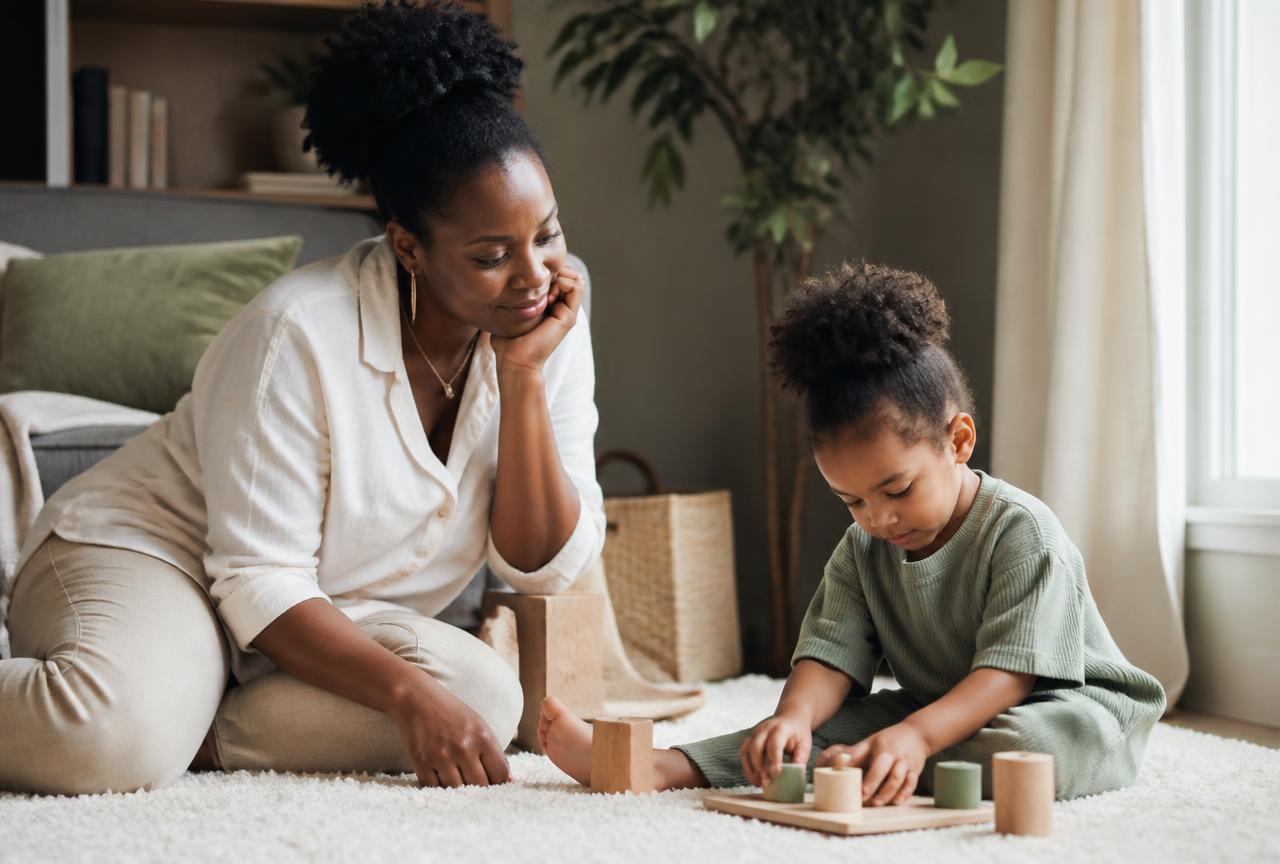
Long before a first sentence, a child is already telling you things.
I know that now. But I didn’t know it when I first became a mother.
When you bring a baby home from the hospital, there is no manual for your child. There are books. There are milestone charts. There are pediatrician visits. There are family members and friends who have raised children before you, each with their own experiences and advice.
But there is no true guideline that tells you exactly who your child is going to be. No one can hand you a guide that says: This is exactly how your child will develop. This is when they will speak. This is how they will communicate. And this is what you should do if their path looks different.
Like many new parents, I was learning as I went. And I assumed language was something that simply came as a child got older. Babies became toddlers. Toddlers started talking. Words became sentences. Sentences eventually became conversations.
I didn’t understand how much actually goes into communication development. I certainly didn’t understand all the ways a child could be communicating before spoken language arrived.
So when my son’s language wasn’t developing in the way I expected, I started searching for an explanation. And for a while, many of those explanations pointed back at me.
Maybe I didn’t talk to him enough. Maybe our house was too quiet. Maybe he wasn’t hearing enough conversation. Maybe language wasn’t being modeled enough. Maybe we needed to live with grandparents or have more people around us who were constantly talking. Maybe I was too quiet. Maybe his father was too quiet. Maybe he was just shy.
And underneath all of those maybes was a much harder question: Did I do something wrong?
When questions start to feel like blame
Some of those early appointments made that question even louder. When you’re a new parent and professionals begin asking how often you talk to your child, what happens at home, how your child communicates, what words they use, what they don’t say, and what you’ve noticed, it can be difficult not to turn those questions inward.
I didn’t always hear: We’re gathering information so we can better understand your child. Sometimes what I heard was: What didn’t you do?
So I searched my own parenting for the answer.
Maybe I should have narrated every trip through the grocery store.
Maybe I should have talked constantly while making dinner.
Maybe there should have been more people in our home filling every quiet space with conversation.
Maybe I had somehow missed something that everyone else knew to do.
I didn’t yet understand that quiet wasn’t the enemy.
And I didn’t understand that my son’s communication wasn’t absent simply because it didn’t always look the way I expected communication to look.
That understanding came later.
I had to learn to see communication differently
Over time, I started noticing things I hadn’t known to count before.
The way he reached for me. The way he brought me something he wanted me to see. The way his expression changed when something felt wrong. The things that excited him. The things he avoided. The way he could communicate a preference before he could necessarily explain the reason for it.
The pauses. The gestures. The looks. The sounds. The attempts.
I had been waiting for communication to arrive in the form I recognized: Words. But communication had already arrived.
I just had to learn how to recognize it.
I had been waiting for communication to arrive in the form I recognized: words. But communication had already arrived.
And that realization eventually became one of the ideas at the heart of Sovani Creative™:
Communication begins long before the words do.
Before the words, there is connection
Some of the most meaningful conversations in our home haven’t started with a sentence.
They’ve started with a look. A gesture. A sound. A hand leading me toward something. Something being brought over because he wanted me to see it. A facial expression I had learned to recognize. Or simply a pause.
Those moments taught me to stop asking only: “What is he saying?” and begin asking: “What is he communicating?”
That small shift changed a lot.
Because communication isn’t simply the ability to produce language on demand. Communication is also the ability to express:
- I want this.
- I don’t want this.
- I need help.
- I need more time.
- Something is wrong.
- Look at this.
- This makes me happy.
- I have something to tell you.
- I want you here.
Those messages count. They have always counted.
Sometimes the words are there. They just need more time.
One of the easiest mistakes to make when someone takes longer to answer is to assume they didn’t understand the question. So we ask again. And again. Or we immediately say it a different way. Or we answer for them.
I’ve done all of those things.
What I eventually learned is that sometimes what looks like silence is actually processing. Think about everything that may have to happen after a seemingly simple question. The person has to hear the question. Understand what is being asked. Think about the answer. Decide what part they want to share. Organize those thoughts. Find the words. And then produce the response.
That’s a lot happening inside what, from the outside, may look like nothing more than a pause.
I’ve learned that sometimes one of the most supportive things I can do is simply wait. Not the kind of waiting where you’re staring at someone expectantly, making every second of silence feel heavier. Real waiting. Giving the conversation room.
Sometimes that means saying: “Take your time.” Or: “Want choices?” Or: “Want me to go first?” And sometimes it means saying nothing at all.
That space communicates something too: I’m still here. You don’t have to rush for me.
A conversation shouldn’t feel like a test.
A conversation shouldn’t feel like a test
This became especially important to me as my son grew older. Children are asked questions constantly. What did you do today? What did you learn? Who did you sit with? Why did you do that? How did you feel? What happened next?
We usually ask because we’re interested. We’re trying to connect. But for someone who needs more support organizing language, a loving attempt at conversation can quickly start feeling like an interview. Question. Answer. Question. Answer. Question. Answer. And then we wonder why the conversation stops.
So I started thinking differently about what successful conversation could look like. Instead of always asking another question, I could share something too.
Instead of: “What did you do at school today?” I might start with: “Something funny happened to me today.”
Instead of asking for an entire story: “Tell me one thing about lunch.”
Instead of the wide-open: “How was your day?” I might offer: “Good day, okay day, or hard day?”
A smaller doorway can still lead to a meaningful conversation. Sometimes it leads much farther.
Progress isn’t always a longer sentence
This may be one of the most important things I’ve learned. We tend to recognize communication progress when it becomes visible. A new word. A longer response. A complete sentence. A longer conversation. And those things absolutely can be worth celebrating.
But progress can also be quieter. Progress can be initiating without being prompted. Responding. Asking. Clarifying. Expressing a preference. Saying: “I don’t know.” Saying: “Give me a minute.” Saying no. Correcting someone who misunderstood. Asking another person a question. Returning to finish a conversation later. Keeping an interaction going for one more turn than before.
Even recognizing I don’t want to talk about this right now is communication.
The goal cannot simply be teaching someone to say more. We also have to help them discover that their communication has power.
That their preferences matter. That their no matters. That asking for time is allowed. That not knowing what to say immediately doesn’t mean they have nothing to say.
Support isn’t the opposite of independence
There are times when someone may need choices. There are times when they may need a sentence starter. A visual. A model. A reminder. A little help finding the first word. That’s support. And needing support isn’t failure.
I’ve come to think about communication support differently too. The goal isn’t to remove every scaffold as quickly as possible. The goal is to provide enough support for communication to feel possible—and then create room for independence to grow.
Some days that may mean: Guided. Other days: Supported. And sometimes: Independent. All three can represent progress.
For the parent quietly wondering if you caused this
I remember that question. So I want to be careful here. Supporting language development matters. Talking, reading, playing, responding, modeling language and creating opportunities for interaction can all be valuable parts of a child’s development.
But parenting shouldn’t become an endless investigation into everything you think you should have done differently. I spent enough time looking backward.
Eventually, a different set of questions became much more useful: What helps my child communicate now? What gives him enough time? What makes a question easier to answer? When does conversation seem to come more naturally? When does it begin to feel like pressure? What kind of support helps? When should I offer choices? When should I simply wait? When should I step back?
Those questions changed the direction of our conversations. They changed me, too. I stopped measuring every interaction against what I thought communication was supposed to look like and started paying closer attention to the person communicating in front of me.
I wish I had understood that much earlier.
This is why I created Sovani Creative™
Sovani Creative™ didn’t begin because I believed families needed another collection of perfect-parenting advice. It grew from lived experience and from recognizing a space I knew very well:
The space between being told that communication matters and knowing what to actually do in the everyday moment. At the kitchen table. In the car. After school. During homework. Before an appointment. When someone wants to talk but can’t quite find the opening. When a parent wants to connect without turning every interaction into another lesson.
Those ordinary moments matter. They’re where so much communication actually happens. And they’re where confidence can begin to grow.
That’s why the tools I create aren’t intended to make someone perform communication “correctly.” They’re designed to make communication feel more accessible and less pressured. To give someone a place to begin. To provide choices when the words aren’t immediately available. To support expression. To make room for processing. And, when possible, to allow someone to need less prompting over time—not because support was taken away, but because confidence and independence have grown.
Before the words…
There may be processing. There may be regulation. There may be observation. There may be uncertainty. There may be a feeling that hasn’t been named yet. There may be an idea waiting to be organized. There may be someone trying very hard to meet us halfway. And there may already be far more communication happening than we realize.
Our job isn’t simply to pull the words out faster. Sometimes our job is to slow down enough to recognize what is already being said.
Because the goal isn’t simply more words. It’s greater understanding.