
Executive Function
Nine Visual Supports That Quietly Change Everything
By Phizzics Davis · 8 min read
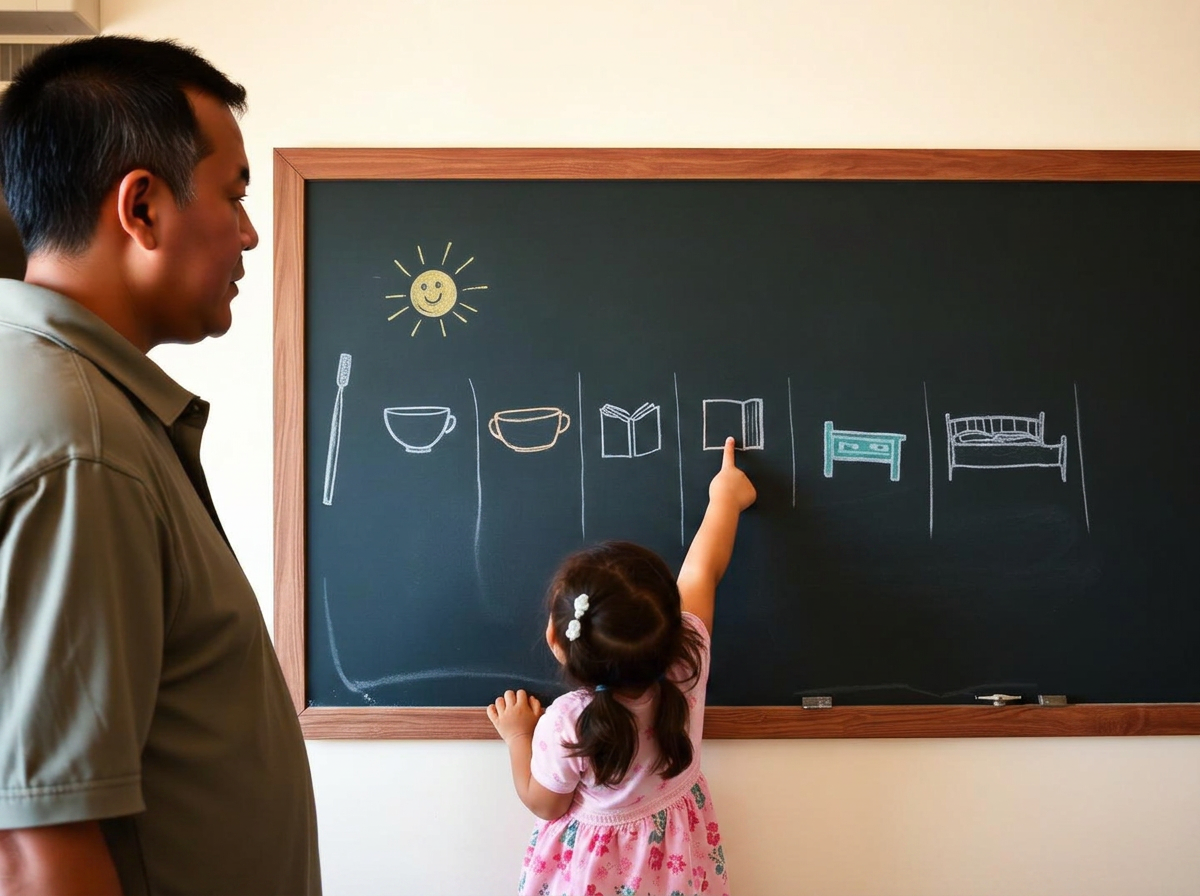
There is a whiteboard on our refrigerator that has been there for three years.
It has survived two moves, a kitchen renovation and countless moments of someone (usually me) saying, “Maybe we don’t need it anymore.”
We still need it.
Not because anyone in this house is incapable of remembering things.
Because remembering things takes energy, and that energy is better spent on literally anything else.
Visual supports are one of the most quietly powerful tools I know of for neurodivergent families. Not because they’re complicated. Because they aren’t.
Seeing It Can Be Easier Than Holding It
A lot of daily stress comes from holding invisible information.
What happens next.
What comes before that.
What I was supposed to remember.
What I forgot because I was remembering the other thing.
For many neurodivergent people, holding all of that internally is exhausting. It takes real, measurable cognitive effort. And when that effort runs out, what looks like a meltdown or a shutdown is often just a system that ran out of working memory.
A visual support moves the information out of the head and into the environment.
It doesn’t rush anyone.
It doesn’t repeat itself in an increasingly frustrated tone.
It just stays there, calm and consistent, doing its job.
And for many families, that changes everything.
Here are nine that have made a real difference in our home and in the homes of families I know.
1. Pattern Recognition and Choices
Many families, especially those supporting autistic or ADHD children, find that visual choices and patterns are easier to process than long verbal lists. Instead of listing five options out loud, laying out two or three visual choices — actual objects, pictures or even drawings — can transform a stressful moment into a manageable one.
Choosing between two snacks is much easier when you can see the snacks.
And for a child who is still building speech, pointing to a picture of what they want is communication. Full stop.
2. Simple Picture Schedules
This doesn’t need to be elaborate. Three to five steps with pictures or simple drawings showing what happens next.
Wake up. Breakfast. Get dressed. School.
Picture schedules work because they answer the question before it has to be asked. They reduce anxiety not by controlling anyone but by making the day predictable enough to relax into.
3. Task Cards
Small cards showing individual tasks are especially helpful for children and teens who feel overwhelmed by a long to-do list. One card at a time. Finish it, flip it, move to the next.
This works for homework, chores and morning routines.
It also works for adults who need external structure to get started. Starting is often the hardest part, and a card that says exactly what “starting” looks like removes a surprising amount of friction.
4. Emotion Charts
Feeling charts or emotion thermometers give children (and adults) a way to point instead of explain.
When someone is overwhelmed, finding the right words is often the hardest part of communicating. A chart removes that barrier entirely. You don’t have to name the feeling. You just have to find it.
Over time, the naming comes. But the chart is there for the days when it doesn’t.
5. Transition Warnings
Visual timers or countdown cards help make change feel less abrupt.
Five more minutes. Then we clean up.
For someone who experiences transitions as genuinely distressing, a visual countdown is not a convenience. It is a kindness. It gives the brain time to prepare for a shift that might otherwise feel like being yanked out of one world and dropped into another.
6. First / Then Boards
This simple visual layout shows what is happening now and what comes next.
First bath, then story.
It sounds almost too simple to matter. But for many children, knowing what comes after a hard thing is what makes the hard thing tolerable. The “then” is a promise, and promises matter.
7. Calm-Down Choices
A small visual menu of calming options can be a lifeline during moments of overwhelm.
Quiet space. Headphones. A walk. Water.
The point is not to prescribe what should calm someone down. It’s to remind them, in the moment when their brain is least able to generate ideas, that options exist.
8. Visual Boundaries
Some children feel safer when they can see their space.
A specific cushion. A marked corner of the couch. A tape line on the floor that says this is where my body goes during circle time.
This isn’t about restriction. It’s about giving the brain a physical anchor so it doesn’t have to work so hard to figure out where to be.
9. A “What to Do When I’m Stuck” Card
A small card that says: Take a breath. Ask for help. Take a break. Try again.
This one is deceptively powerful because it externalizes a sequence that many people cannot access under stress. When you’re stuck, you don’t have to remember what to do. You just have to look at the card.
And over time, the sequence becomes internal. The card teaches the skill until the skill no longer needs the card.
None of these are magic. All of them are just paper, pictures, tape and a little bit of forethought.
The Goal Isn’t to Need Nothing
Sometimes families worry that visual supports will become a crutch.
I want to gently push back on that.
A ramp is not a crutch.
Glasses are not a crutch.
A visual schedule is not a crutch.
These are tools. And tools are how humans solve problems. We don’t tell someone to squint harder when glasses would work better.
If a visual support helps someone in your life feel calmer, more capable and more independent, that is not dependence.
That is access.
And access changes everything.