
Identity & Self-Advocacy
“I Need a Minute” Is a Complete Thought
By Phizzics Davis · 8 min read
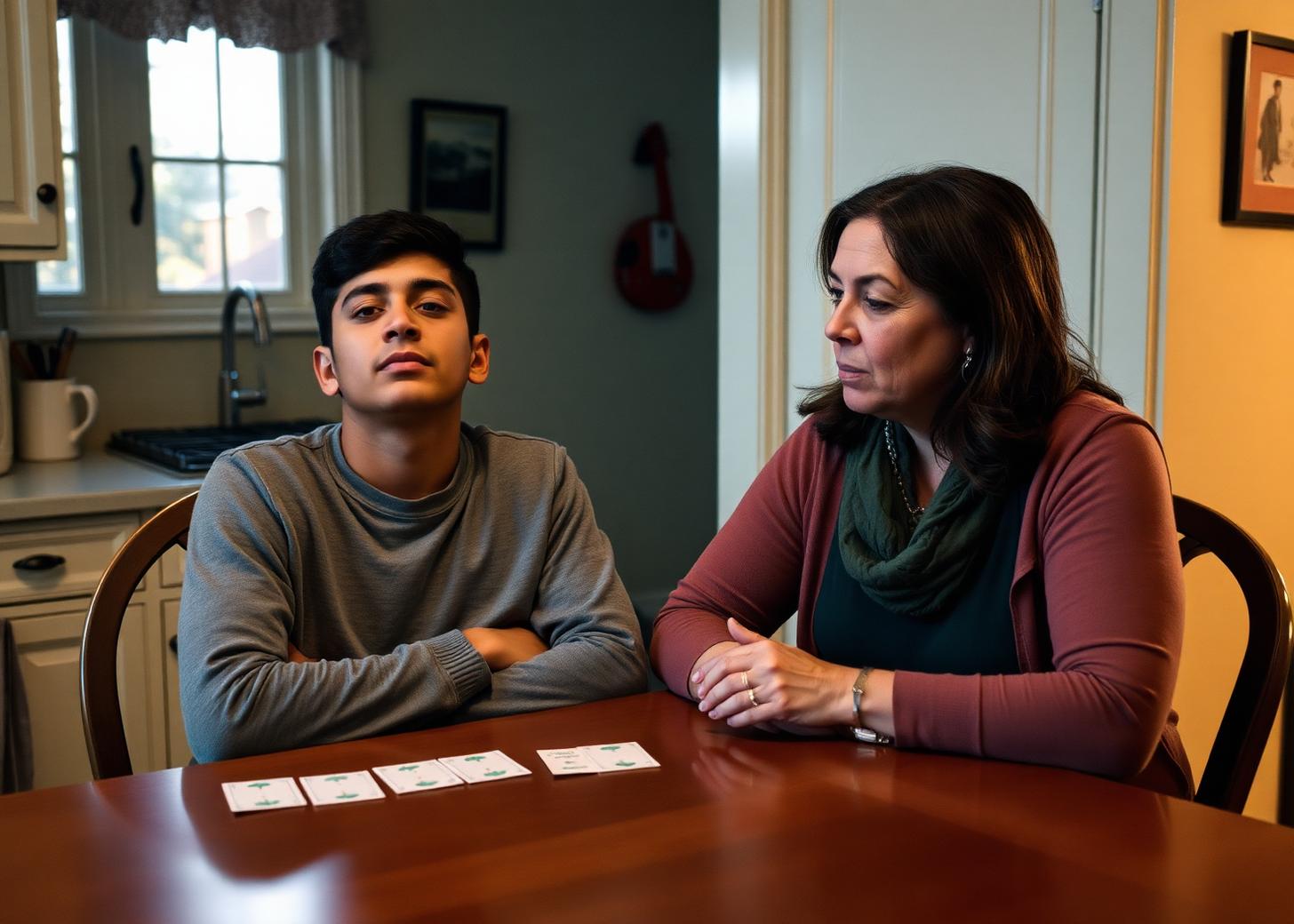
My son said three words to me last week that stopped me in the middle of what I was doing.
“I need a minute.”
Not in distress.
Not in shutdown.
Just calmly, clearly, in the middle of a conversation that was getting a little too fast, a little too loud, a little too much.
He said it.
He walked to the other room.
He came back five minutes later and finished the conversation.
And I stood there thinking: this is everything we’ve been working toward.
We Spend a Lot of Time Teaching Children How to Respond
Answer when someone asks you a question.
Look at people when they talk to you.
Use your words.
And those things have their place.
But we spend far less time teaching children something equally important: how to advocate for what they need in the moment they need it.
How to say “I don’t understand.”
How to say “Can you say that differently?”
How to say “I need a break.”
How to say “I’m not ready to talk about this yet.”
These are not rude.
These are not avoidant.
These are self-advocacy.
And self-advocacy is a form of communication that deserves just as much practice as any other.
Silence Isn’t Always the Absence of an Answer
When someone goes quiet after a question, we tend to assume one of two things: they didn’t hear, or they don’t know.
But often, silence means processing.
The question landed. The answer is forming. It just needs more time than the conversation is allowing.
Teaching someone to say “Give me a minute to think about that” is giving them the ability to stay in a conversation that would otherwise leave them behind.
That’s not a delay.
That’s participation on their own terms.
“I Don’t Know” Is Communication
This one matters to me.
Many neurodivergent children (and adults) feel enormous pressure to produce an answer, any answer, rather than sit with the discomfort of not knowing.
But “I don’t know yet” is a valid response.
“I’m not sure how I feel about that” is a valid response.
“Can I think about it and tell you later?” is a valid response.
When we teach children that these phrases are acceptable, we teach them that their internal experience matters.
That they don’t have to perform certainty they don’t feel.
That honesty is more important than speed.
Asking for Clarification Is a Skill
“Can you explain that a different way?”
Seven words.
But for many people, saying them feels like admitting failure.
It isn’t.
Asking for clarification means you’re engaged enough to want to understand.
It means you care about getting it right.
It means you’re still in the conversation.
I want my son to be able to say this in a classroom.
In a job interview.
In a friendship.
In any room where someone is speaking in a way that doesn’t quite reach him.
Because the alternative — nodding along and pretending to understand — helps no one.
A Break Is Something You Can Communicate Before Everything Falls Apart
This is the one that changed our house.
For a long time, my son’s breaks were not chosen.
They were the result of overload.
The conversation would get too intense, the sensory input would get too high, the emotions would get too big, and the break would happen — but as a meltdown, not a choice.
Learning to say “I need a minute” before reaching that point was a turning point.
It meant he could feel the overwhelm building and name it.
It meant he could step away with dignity instead of falling apart.
It meant he could come back.
That last part matters most.
A break that you choose is a bridge back to the conversation.
A break that happens to you is a wall.
Self-advocacy builds bridges.
We Have to Respect the Advocacy We Teach
If we teach a child to say “I need a minute” and then respond with “Not right now” or “Answer me first,” we are teaching them that their advocacy doesn’t count.
And if it doesn’t count, they’ll stop doing it.
When my son says “I need a minute,” I stop.
I don’t finish my sentence.
I don’t ask one more question.
I let him go.
Because the skill only works if the response honors it.
And every time I honor it, I’m telling him: your voice matters. Your needs are real. I hear you.
Self-Advocacy Doesn’t Mean Doing Everything Alone
Sometimes advocating for yourself means saying “I need help.”
Sometimes it means saying “Can you come with me?”
Sometimes it means saying “I can’t do this by myself and that’s okay.”
Independence is not the absence of support.
Independence is knowing when to ask for the support you need.
And that knowing — that self-awareness — is one of the most powerful forms of communication there is.
Practice the Words When They Aren’t Needed
We practice these phrases at dinner.
In the car.
During calm moments when nobody needs a break and nobody is overwhelmed.
We say them out loud so they become familiar.
We model them ourselves — “I need a minute before I answer that” — so our children see that adults use them too.
Because a skill that only exists in theory will not be available in a hard moment.
It has to be practiced.
It has to be normal.
It has to be the kind of thing that comes out naturally when the pressure is on.
And eventually, it does.
Eventually, I Won’t Always Be Standing Beside Him
This is the quiet hope underneath all of it.
Right now, I can help my son navigate conversations.
I can prompt. I can wait. I can model.
I can step in when things get hard.
But I won’t always be there.
And the greatest gift I can give him is not my presence in every conversation.
It’s his own voice in every conversation.
The ability to say “I need a minute.”
The ability to say “I don’t understand.”
The ability to say “This is what I need.”
The ability to communicate what is true for him, in whatever way works, in whatever room he’s in.
That’s what we’re building.
One small, brave sentence at a time.